...When it comes to calculation, ... at the end, calculation training consists of three skills, in order:
(1) find the options -- so, find out all the options on the first one and two moves ... it sounds very simple ... simple is not easy -- simple is simple -- ... finding the options, you have to see these things, you will never be perfect but you have to be good at it, and you have to train it
(2) the second part of it is analyze your options -- so you have a few options and then you try to calculate the variations. You don't want to go into long variations -- that's not a skill worth acquiring -- you want to be able to see what's happening in the first few moves of variations
(3) finally the third skill is choose the move you like the best, at the end after you analyzed everything and you have the information. What a lot of people do is they sort of choose what they want to play and then they try to spend forever trying to prove that it's a good move -- it's not a good process
Members' chess sets


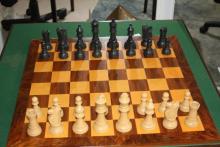


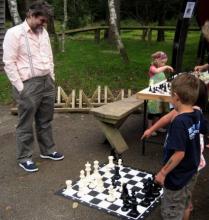


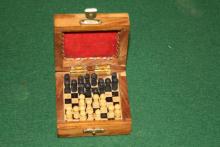


Quotes
|
There is, of course, a very famous saying from Rueben Fine: "I'd rather have a pawn than a finger." It's often quoted during analysis. One of my favorite sayings, though, came as a response to this. About 40 players were watching an online broadcast of a major match. One of the players was a pawn down, and there was some argument as to how much compensation the other had. One of the masters present quoted Fine, "As Reuben Fine said, "I'd rather have a pawn than a finger." |
Duif |