We are always admonished that to blunder-proof our chess, we must search for checks, captures and threats on every move, for ourselves and our opponents.
This is not so easy to practice — how do you know when you’ve missed something, except when a gleeful opponent swoops in to take an overlooked loose piece?
The answer is now at hand:
Here are two sets of positions selected at random moments from a selection of master games.
I was recently asked for some book recommendations, and thought
easy-peasy, I'll point them to something online. Then I looked
at some lists, and thought I'd write my own... Just books, not
videos or Chessable courses. Lots of really great books
omitted. The ChessDojo list
isn't too bad.
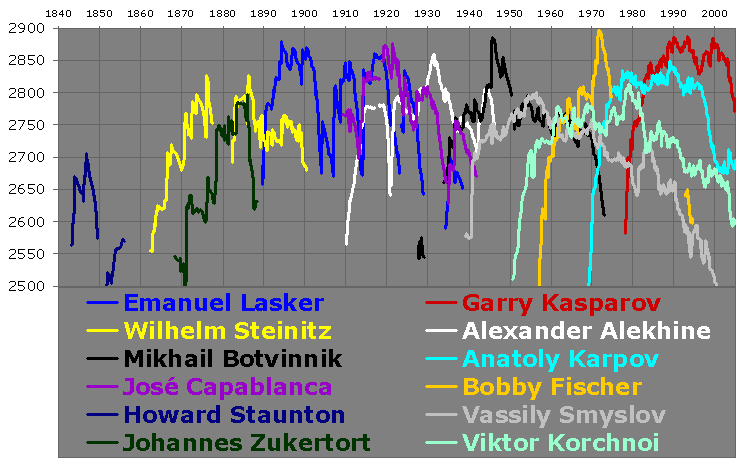
The FIDE Elo rating system began in 1971. Elo did a bit of study trying to work the ratings backwards, but the chief scholar in this regard is Jeff Sonas http://chessmetrics.com/cm/. Jeff devised his own rating system, however -- using an 'absentee' penalty for periods of non-playing. This leads to odd-looking results like Lasker's repeated plummets and recoveries here:
There was an early exclamation of dismay when poor Hazel overlooked an attack on her Queen on Board 8, and shortly after Pengxiao emerged smiling after a 20-move crush of a King's Indian Defence, leaving Exeter 2-0 up. It was soon 3-0 when Reece put away his opponent in a game where both sides were reluctant to castle. Opposing captain Jon Underwood claimed one back on board 2 in an extra-closed Sicilian, but Will Marjoram gradually climbed out of the swamp into which he had sunk to leave Seaton needing to win all the remaining games.
I was updating my series on the world Champions, following Ding Liren's accession to the throne, and did a little due diligence digging around the Internet, as I'm a little out of touch these days.
I came across what looked like a helpful summary on a website which gave a not-very-interesting career summary and cited a few games.
To my shame, I didn't recognise any of the games at all.